

Noise and thin walls: what to ask before renting an apartment
By Ross Quade · Updated 2026-06-17
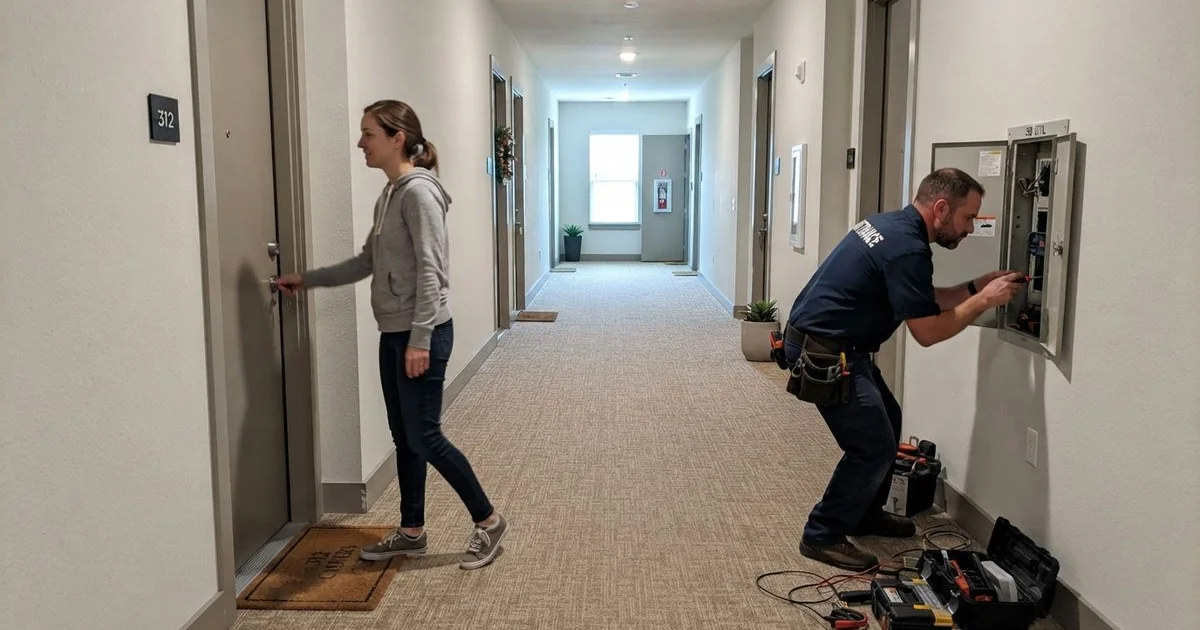
Noise complaints, thin walls, and poor soundproofing show up again and again in renter feedback across Greater Austin, right alongside praise for the same properties’ amenities and staff. A building can have a great pool and a responsive front desk and still be a rough place to sleep if the walls do not block sound well. Here is how to check for this before you sign, since it is much harder to fix after.
Why this varies so much between buildings
Construction type is the biggest factor. Older wood-frame buildings, common in many Greater Austin communities built before stricter modern codes, transmit sound between units more than newer concrete or steel-frame construction. This is not something you can change with a rug or a bookshelf. If sleep quality and quiet matter to you, ask directly what a building’s construction type is and how old it is, since this single fact predicts a lot about your day-to-day noise experience.
Unit placement within a building matters almost as much as construction type. Units directly above or below a gym, a game room, or a pool deck, near an elevator shaft, or facing a busy street tend to generate more noise complaints than interior units on a middle floor away from amenities and traffic.
Top-floor units come with their own tradeoff. They avoid noise from anyone walking above, but they can pick up more sound from HVAC equipment or roof access if the building routes either near the top level, so it is worth asking specifically what is on the roof or the floor directly overhead even for a top-floor unit.
What to check during a tour
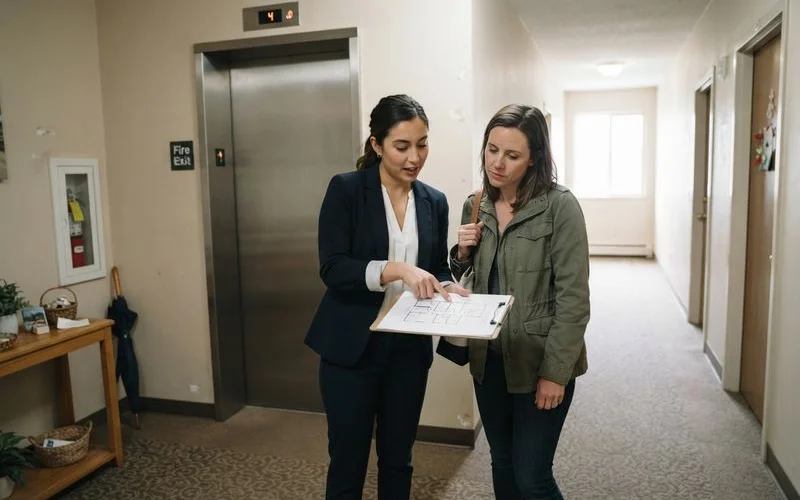
Ask to see the actual unit you would be assigned, not a staged model unit down the hall, since model units are sometimes in a different part of the building with a different noise profile. While you are there:
- Knock on a shared wall and listen for how much sound carries, both what you hear and what you can imagine your own noise carrying back.
- Ask what is directly above, below, and adjacent to the unit, specifically whether it is another residential unit, an amenity space, or a mechanical room.
- Visit at a different time of day than your scheduled tour if possible, since a quiet mid-morning walkthrough tells you little about a Friday evening.
- Ask the leasing office directly whether the building has had noise complaints reported in that specific unit or the ones around it.
Questions worth asking directly
| Question | What it tells you |
|---|---|
| What year was the building constructed, and what is the wall material? | Predicts baseline sound transmission |
| What is directly above and below this specific unit? | Flags amenity-adjacent or high-traffic placement |
| Are there quiet hours in the lease, and how are they enforced? | Shows whether management will act on complaints |
| Has this unit had noise complaints on record? | Direct signal, if the leasing office is willing to answer |
If it becomes a problem after you move in
Document specific incidents with dates, times, and a brief description rather than a general complaint about “noisy neighbors.” A documented pattern is far more useful to management, and to you if the issue escalates, than a single frustrated email. Most leases include a quiet hours clause or a broader nuisance clause that management can enforce against a specific unit, but they generally need a pattern of evidence to act on it rather than a one-time report.
A rug, weatherstripping around the door, or a bookshelf against a shared wall can take the edge off minor sound transfer, but none of it fixes a genuine construction issue. If the core problem is the building’s wall material, treat that as a reason to consider a different unit rather than something you can renovate your way around.
The bottom line
Noise is one of the hardest things to judge from a listing photo or a five-minute tour, which is exactly why it is worth asking about directly rather than assuming it will be fine. The same logic applies to safety concerns: our guide to how much gated security really adds covers what actually predicts a safer-feeling community. Our homepage covers Greater Austin apartment categories if you are comparing options, and our methodology page explains how resident feedback, including noise and soundproofing complaints, factors into our scoring.
FAQ
- Are thin walls a common complaint in Austin apartments?
- Yes, noise and soundproofing issues are among the most frequently repeated complaints in renter feedback, especially in older wood-frame buildings compared to newer concrete construction.
- Does unit location within a building matter for noise?
- Significantly. Units above or below common areas, near elevators, or facing a busy street tend to get more noise complaints than interior units on middle floors.
- Can I ask to see a specific unit rather than a model unit?
- Yes, and it is worth insisting on. A model unit is often staged and may not reflect the noise level of the actual unit you would be assigned.
- What can I do if noise becomes a problem after I move in?
- Document specific incidents in writing with dates and times, and report a pattern to management rather than a single event. Most leases include quiet hours or nuisance clauses that management can enforce.