

Roommate on the lease: what happens if they stop paying rent
By Ross Quade · Updated 2026-06-24
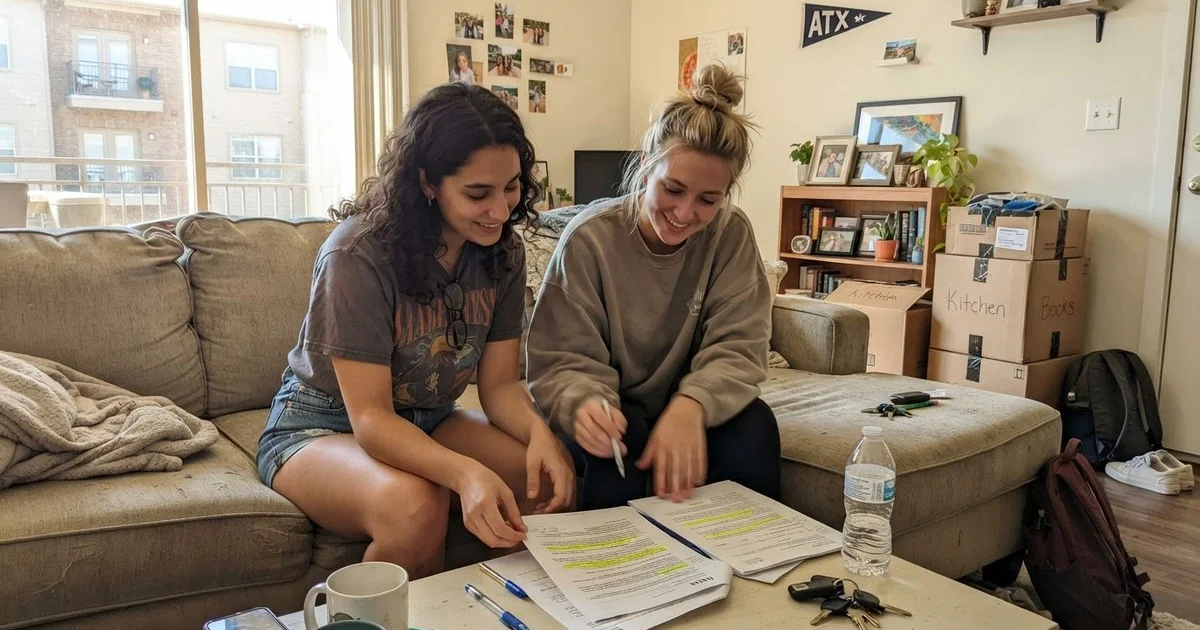
Splitting rent with a roommate is common in Greater Austin, and most of the time it works out fine. But most standard leases include a clause called joint and several liability, and it means something specific worth understanding before you sign, not after a roommate’s rent check bounces.
This is general information about how shared leases typically work, not legal advice for your specific lease or situation. If you are already in a dispute with a landlord or roommate over unpaid rent, a local tenant rights organization or attorney can review your actual lease terms.
What joint and several liability actually means
When two or more people sign the same lease, joint and several liability makes each person individually responsible for the full rent amount, not just their agreed-upon share. If your roommate stops paying their half, the landlord can legally pursue you for the entire remaining balance regardless of what informal arrangement you and your roommate made between yourselves. This is standard in most Texas leases and is rarely something a property will waive.
This matters most in a dispute, since the private agreement you and a roommate made about splitting costs is not something the landlord is bound by. The landlord’s only relationship is with the lease itself.
How this plays out in practice
If a roommate falls behind, the landlord typically sends notice to all tenants on the lease, not just the one behind on payment, since all of you are equally liable. If the balance is not resolved, the entire household faces the same consequences, including late fees and potential eviction proceedings, regardless of who actually missed the payment.
A private roommate agreement, a written document between you and your roommate outlining how rent, utilities, and responsibilities are split, does not change what the landlord can collect from you under the lease. What it does is give you a basis to pursue your roommate directly for their share afterward, ideally in writing, dated, and signed by both parties before you move in together.
| Scenario | What the landlord can do | What a roommate agreement covers |
|---|---|---|
| Roommate stops paying their share | Pursue any or all tenants for the full rent | Gives you a basis to recover their share from them directly |
| Roommate wants to move out early | Requires landlord approval to remove from lease | Can outline notice and replacement expectations between roommates |
| Dispute over shared costs (utilities, etc.) | Not the landlord’s concern | Directly addresses this if both parties signed |

Removing or replacing a roommate
You cannot unilaterally remove a roommate from a signed lease, even if they stop paying or move out. Any change requires the landlord’s cooperation, typically through a formal lease amendment or by the landlord approving a replacement tenant who then re-signs. Start this conversation with the landlord as early as possible if a roommate situation is breaking down, since landlords generally prefer a documented resolution over an informal one that leaves liability unclear.
Protecting yourself before you sign
If you are considering a roommate with thin credit history or unstable income, ask the property directly whether they will accept that roommate with their own guarantor, rather than assuming the financial risk defaults to you as the stronger applicant. It is also worth having the roommate agreement conversation before signing anything, not after a problem shows up, since it is much easier to agree on expectations when there is no dispute yet to color the discussion.
A written roommate agreement does not need to be complicated to be useful. At minimum, put in writing who pays which bills, what happens if someone wants to move out early, and how the security deposit gets split at the end of the lease. Having this on paper, even informally, gives you something concrete to point to if a disagreement turns into a real dispute later.
The bottom line
A shared lease means shared liability, not shared risk split neatly down the middle. Knowing that going in changes how you pick a roommate and how carefully you document your private arrangement with them. Our homepage covers the rest of our Greater Austin apartment guides, and our methodology page explains how we evaluate the communities and management companies renters deal with.
FAQ
- Am I responsible for my roommate's share of rent if they stop paying?
- In most standard leases, yes. Joint and several liability means each tenant on the lease is individually responsible for the entire rent amount, not just their agreed share.
- Can I remove a roommate from the lease if they stop paying?
- Only with the landlord's cooperation, typically through a lease amendment or by finding a replacement tenant the landlord approves. You cannot unilaterally remove someone from a signed lease.
- Does a roommate agreement protect me legally with the landlord?
- A private roommate agreement can help you recover money from your roommate directly, but it does not change what the landlord can legally collect from you under the actual lease.
- Should I get a guarantor instead of adding a shaky roommate?
- If a potential roommate has weak credit or unstable income, ask whether the property will accept them with their own guarantor rather than assuming the risk falls only on you.